Judge Lets RAM Price-Fixing Lawsuit Against Samsung, SK Hynix and Micron Move Forward
A federal judge refused to toss a class action claiming Samsung, SK Hynix and Micron worked together to cut regular DRAM supply and push memory prices up. Here's what the ruling means for the phones and laptops you buy.
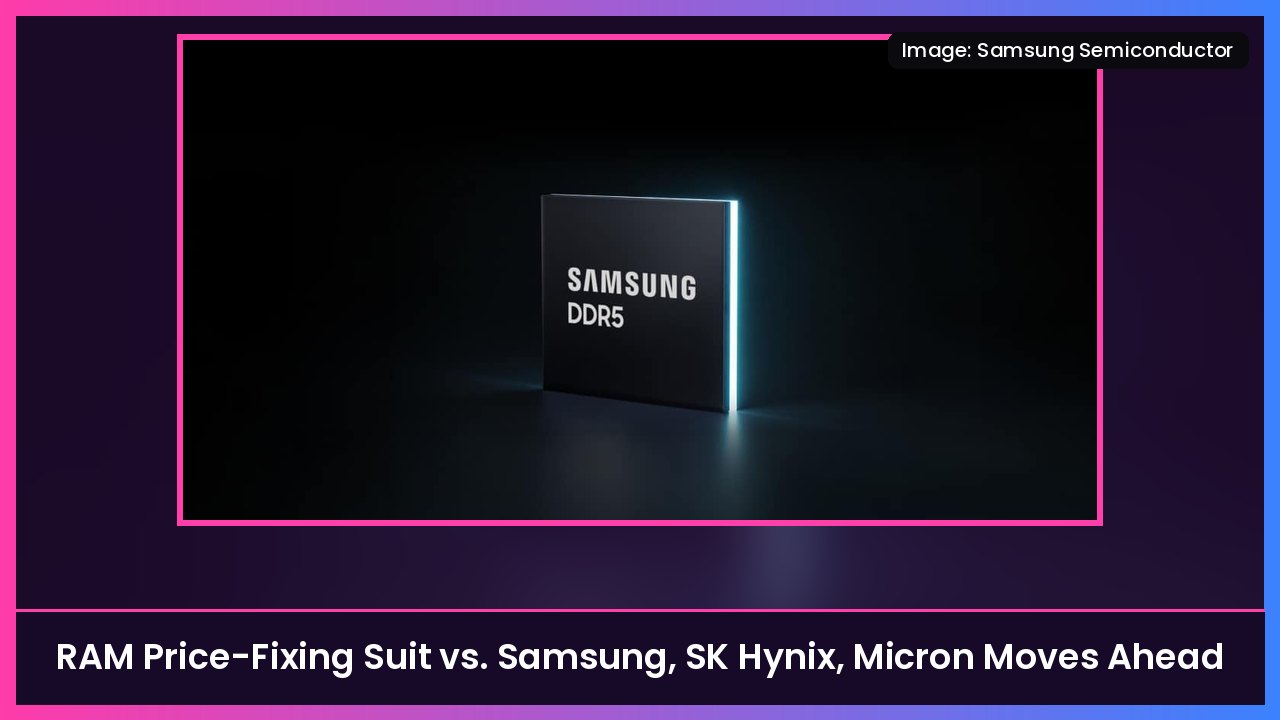
Quick summary: If you’ve wondered why laptops and phones with more RAM keep getting pricier, this one’s for you. On November 14, U.S. District Judge Noël Wise in the Northern District of California denied Samsung, SK Hynix and Micron’s motion to dismiss a proposed class action that accuses the three memory giants of conspiring to restrict the supply of regular DRAM, the memory inside PCs, phones and servers. That doesn’t mean they did it. It means the case moves forward. I read the coverage from LitNews, Wccftech and INTELWIRE, and here’s what you need to know.
Key takeaways
- The ruling: Judge Wise denied the companies’ joint motion to dismiss in full, finding the complaint plausibly alleges an agreement that violates Section 1 of the Sherman Act, per LitNews.
- The claim: The three companies allegedly cut regular DRAM production starting in late 2022 and shifted factory capacity to HBM, the high-bandwidth memory used in AI chips, which squeezed supply for everyday memory like DDR5.
- The numbers in the complaint: The three controlled more than 91% of global DRAM revenue as of Q3 2025, and regular DRAM prices allegedly rose 171.8% in one year and 697% over 18 months.
- Nothing is proven yet. At this stage the court has to treat the complaint’s allegations as true. The companies say the AI boom, not a conspiracy, explains their moves.
- What’s next: The companies have to file their answers by December 7, 2026, and the first case management conference is set for January 12, 2027.
What the lawsuit says
The case, Garciaguirre v. Samsung Electronics, was filed June 25, 2026 by 17 consumers and small businesses from five states, according to LitNews. It’s about “conventional” DRAM, the standard memory in computers and phones, not the specialty AI memory.
The complaint says HBM “requires approximately three to four times the silicon wafer area per gigabyte compared to conventional DDR5 DRAM.” So every wafer that goes to AI memory makes a lot less regular RAM. And, the complaint alleges, “not one of the three Defendants expanded or announced plans to meaningfully expand commodity DRAM production capacity,” even as prices hit records.
Other things the judge counted at this stage, per LitNews and Wccftech:
- All three allegedly locked in long-term HBM contracts, while Samsung and SK Hynix reportedly refused long-term deals with big regular-DRAM buyers.
- Micron announced on December 3, 2025 that it would shut down Crucial, its 30-year-old consumer memory brand.
- Samsung and Micron allegedly delayed or halted new DRAM plants.
- All three allegedly wound down DDR4 in the same quarter of 2025. The complaint says older DDR4 ended up costing more per gigabyte than newer DDR5.
- All three allegedly adopted near-identical customer-vetting practices in January 2026, which the judge said “strongly support a plausible inference of conspiracy.”
The judge’s best line, quoted by both LitNews and Wccftech: “Plaintiffs’ allegations go beyond hawks watching each other; their contentions are more akin to hawks flying in formation – an activity that hawks ordinarily do not do.”
What the judge didn’t buy
It wasn’t a total win for the plaintiffs. LitNews reports the judge gave no weight to investor comments about “supply discipline,” to executives meeting at industry conferences, or to the simple fact that only three companies make most of the world’s DRAM, which she called “neutral.” INTELWIRE adds that she agreed the HBM pivot alone doesn’t imply collusion, and that the DDR3 allegations fail.
The companies argued this was a rerun of DRAM II, an earlier suit over a 2016–2018 supply crunch that the Ninth Circuit threw out in 2022. “The Court finds that it is not,” Judge Wise wrote.
There’s history here too. According to the complaint, these companies were part of a DRAM price-fixing cartel from 1998 to 2002. Samsung paid a $300 million fine, Hynix paid $185 million, and Micron got immunity for cooperating.
Why this matters for your next phone or laptop
RAM is in everything you buy: your Galaxy S26 Ultra, your laptop, your game console. When memory makers squeeze supply, the companies that build those devices pay more, and that usually shows up as higher prices or less RAM for the same price.
This ruling doesn’t change prices tomorrow. It means the plaintiffs can now dig for internal documents and testimony to try to prove their case, as Newzino puts it. The complaint seeks class certification, an injunction and treble damages, but INTELWIRE notes no damages figure has been made public.
My take: if you need a new laptop this holiday season, I wouldn’t wait on a court case that’s going to take years. Black Friday is your best shot at getting more memory for less right now. Two I like: the Lenovo Yoga 7i 2-in-1 16” with 16GB of RAM at Best Buy, and the HP OmniBook 5 14” I reviewed. Check our Best Tech Deals page for today’s prices.
I’ll keep an eye on this one. The companies’ answers are due December 7.
Subscribe to GregglesTV for daily tech news, reviews and walkthroughs.
See today’s GregglesTV Best Tech Deals or browse all deals posts.



Comments
Comments are moderated. Hate, slurs, spam and scam posts are blocked. Don’t include personal info you wouldn’t want public. See the privacy policy.
Loading comments…